
Demo Before You Buy a Gun
It is not a small thing to go buy a gun. Owning a firearm requires considerable responsibility and is a significant milestone in one’s life. I can still remember the first gun I was gifted, the first gun I bought myself, and the last gun I picked up. There is nothing small or insignificant about it. It might not be as large a purchase as a new vehicle or a new home, but it is still a big decision to finally own one that you plan to use for home defense, concealed carry, competition, or even hunting. That’s why I recommend test-firing, dry-firing, and getting to demo a firearm before you make a purchase, no matter what you plan to use it for. Yes, it’s great to get to see a gun in person and at least hold it if possible, but nothing is better than physically firing a gun to see if it even remotely fits you. In this article, I’ll help walk you through what demoing a gun can tell you about whether it’s right for you or not. For the purposes of this article, I’ll focus on handguns, but many of these same ideas apply to long guns as well.
The Non-Negotiable Grip
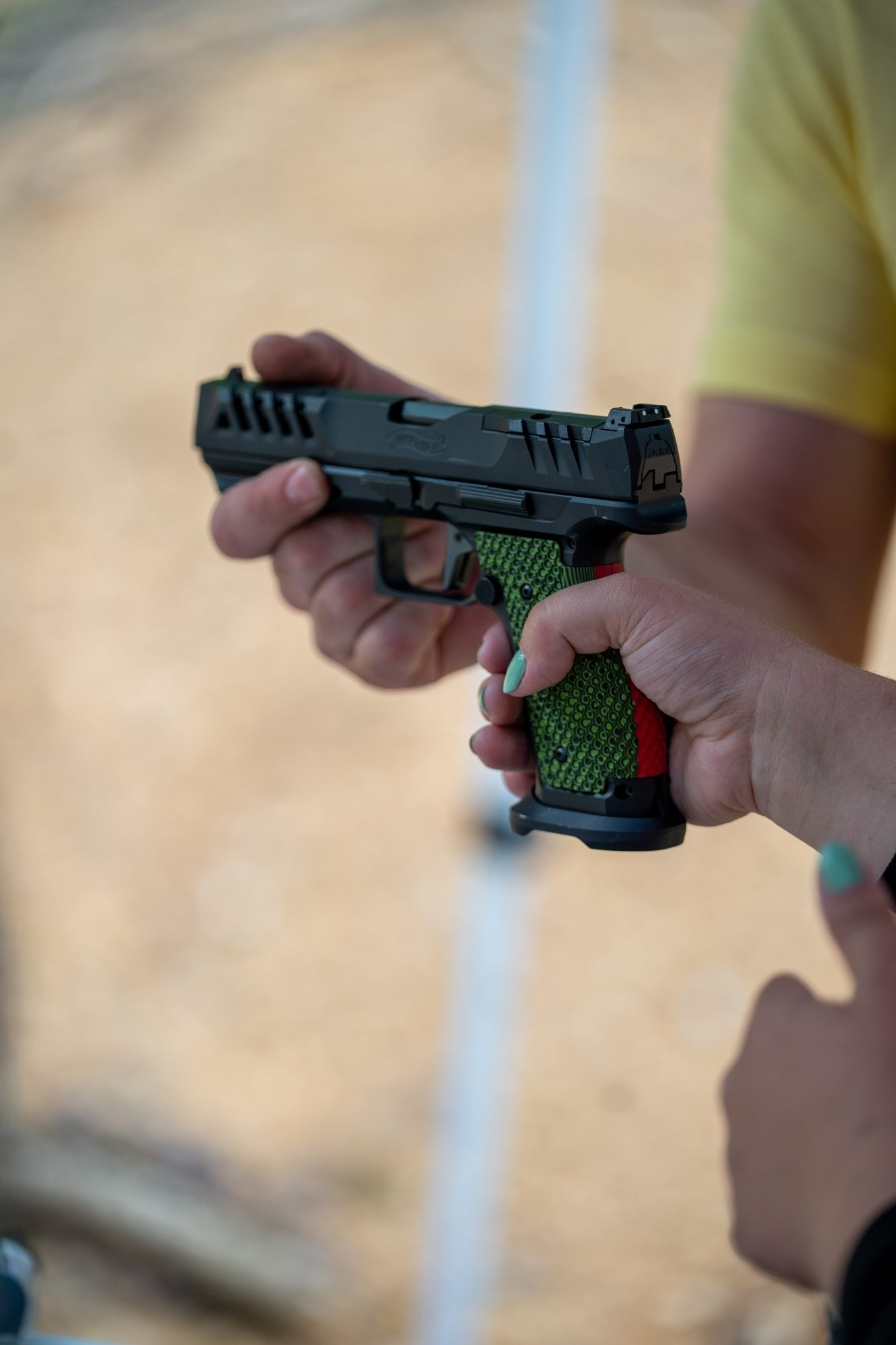
I have seen it all when it comes to gripping a pistol, and I can tell you some guns just don’t fit people’s hands. The number one thing you need to know before you buy a gun is whether or not you can build a proper grip on it. If the answer is no, then set that gun back down and move on. There are thousands of guns out there, and not everything is ergonomically compatible with your hand size. That said, there is some leeway to know about a handgun’s grip that can flip everything I just said upside down. When it comes to pistols, the aftermarket is abundant with different thickness grip panels, various grip textures, and even grips that help weigh down the gun, making it a better-recoiling firearm. This means that in some scenarios, you can build a better grip with aftermarket grips, like those from LOK Grips, but overall, you should be able to create a repeatable, consistent grip with your gun of choice before making modifications. If you’re just a few millimeters shy of the perfect trigger pull, for example, and just need thinner grip panels, I agree the case could be made that the gun will fit with LOK Grips as the solution.
Trigger Pull is Everything
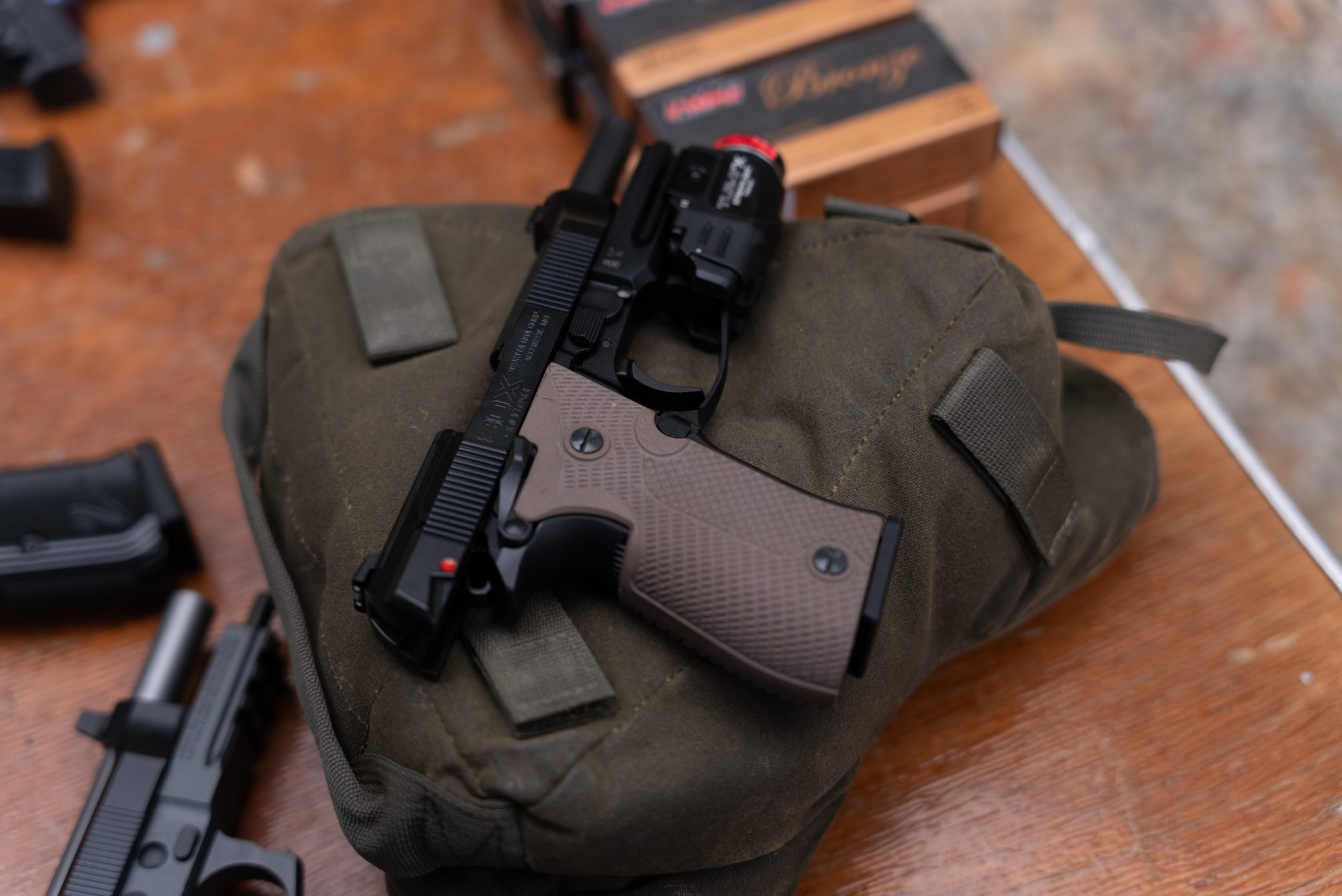
Before you buy a gun, you need to know if you can even reach the trigger and pull it rearward to completion. This might sound super simple, but when you add the complexities of grip safeties, thumb safeties, and double-action triggers, it’s not so simple. I’ve seen too-small hands unable to reach the trigger or unable to get more than the tip of the trigger finger onto the trigger shoe. I’ve seen large hands dwarf micro-compact handguns to where the entire trigger finger has to bend outward to only pull the trigger with the pad of their finger, or where the shooter can only comfortably pull the trigger by using the first or second knuckle. Just like your grip, you should be able to make the same consistent trigger pull every time when you shoot a handgun. If you’re constantly having to adjust your grip or move your trigger finger in or out of the trigger guard to make a perfect trigger pull, that handgun is probably not right for you.
Firearm Function Dry-Fire
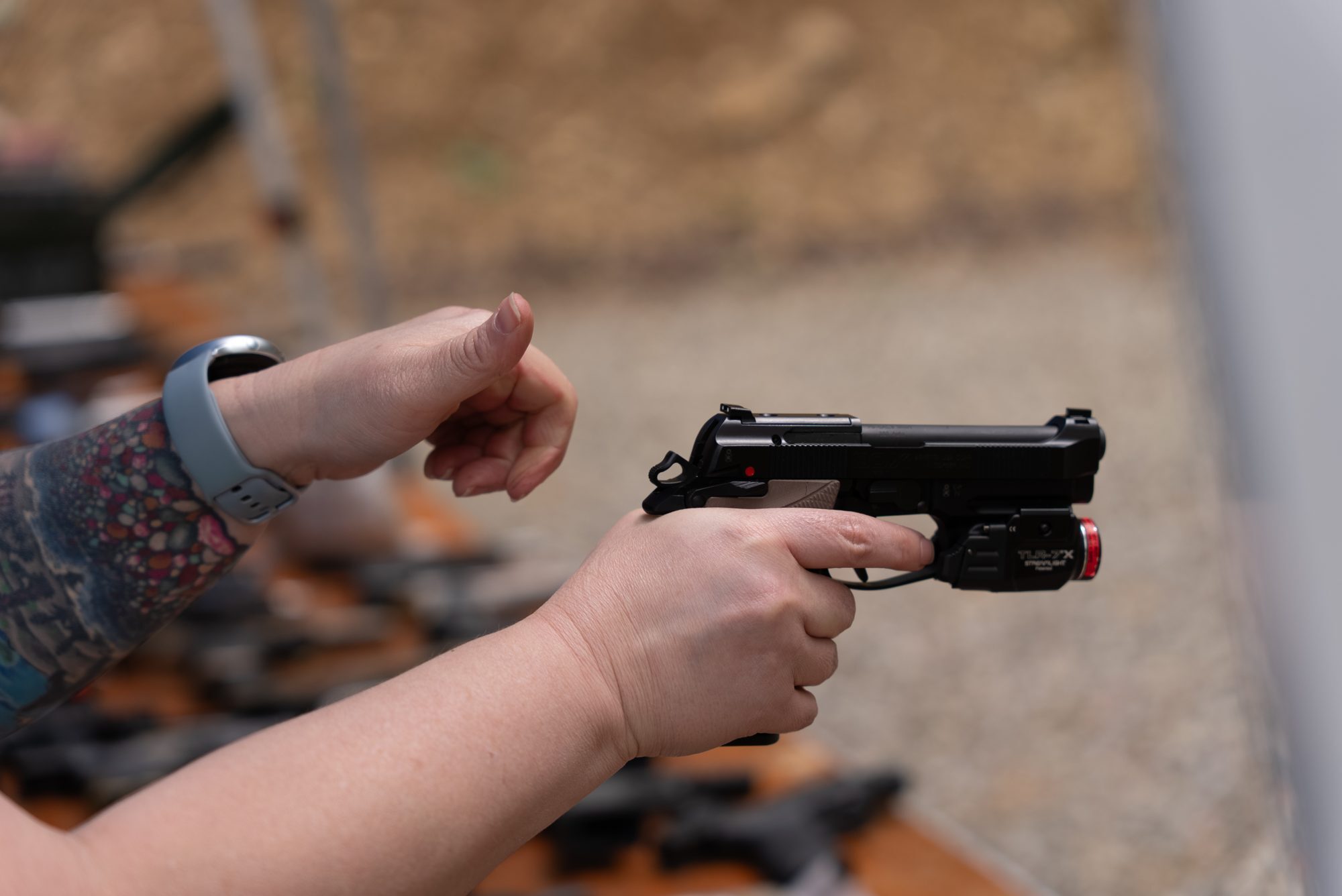
The next thing you need to test before you buy a gun is whether or not you can manipulate the firearm and its controls. What I mean by this is finding out if you can pull the slide back on your own and load a round into the chamber, if you can lock the slide to the rear and ensure the gun is unloaded, if you can manipulate the thumb safety if there is one, and if you can keep the grip safety depressed at all times when you’re shooting a gun that has a grip safety. These are all crucial skills you need to have to load and unload a handgun and ensure you’re able to fire the gun when you want to.
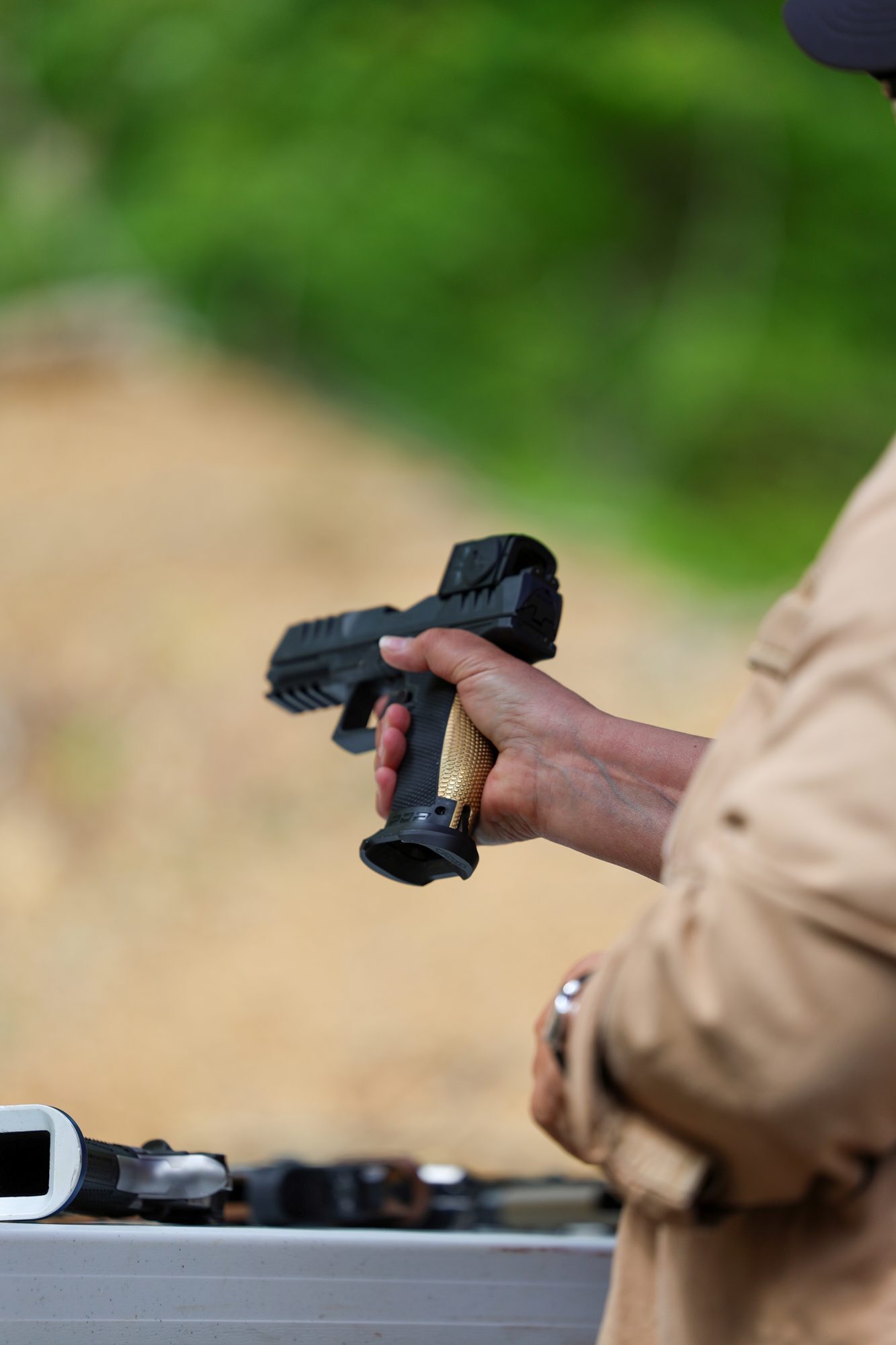 I have seen many women struggle to manipulate a semi-automatic handgun slide, especially striker-fired handguns where they come oversprung from the factory to ensure the gun runs reliably with any type of ammunition. Being able to manipulate the slide is an essential part of gun ownership and is something you need to build up daily with hand-strengthening tools. Yes, there are guns with easy-to-manipulate slides, but that usually means switching to hammer-fired guns and to guns with external safeties. I don’t recommend these guns for concealed carry too often to people because I rarely see gun owners who are willing to dry-fire and live-fire practice daily, weekly, or even monthly. I’ve had numerous students in my classes bring handguns with external safeties and safety themselves during live-fire drills because they haven’t built the habit of manipulating the external safeties. If that happens in real life, it could cost you your life. Ultimately, you need a gun that you can manipulate, but also one that is easy to function when it comes time to use it.
Only Live Fire Can Show Recoil Management
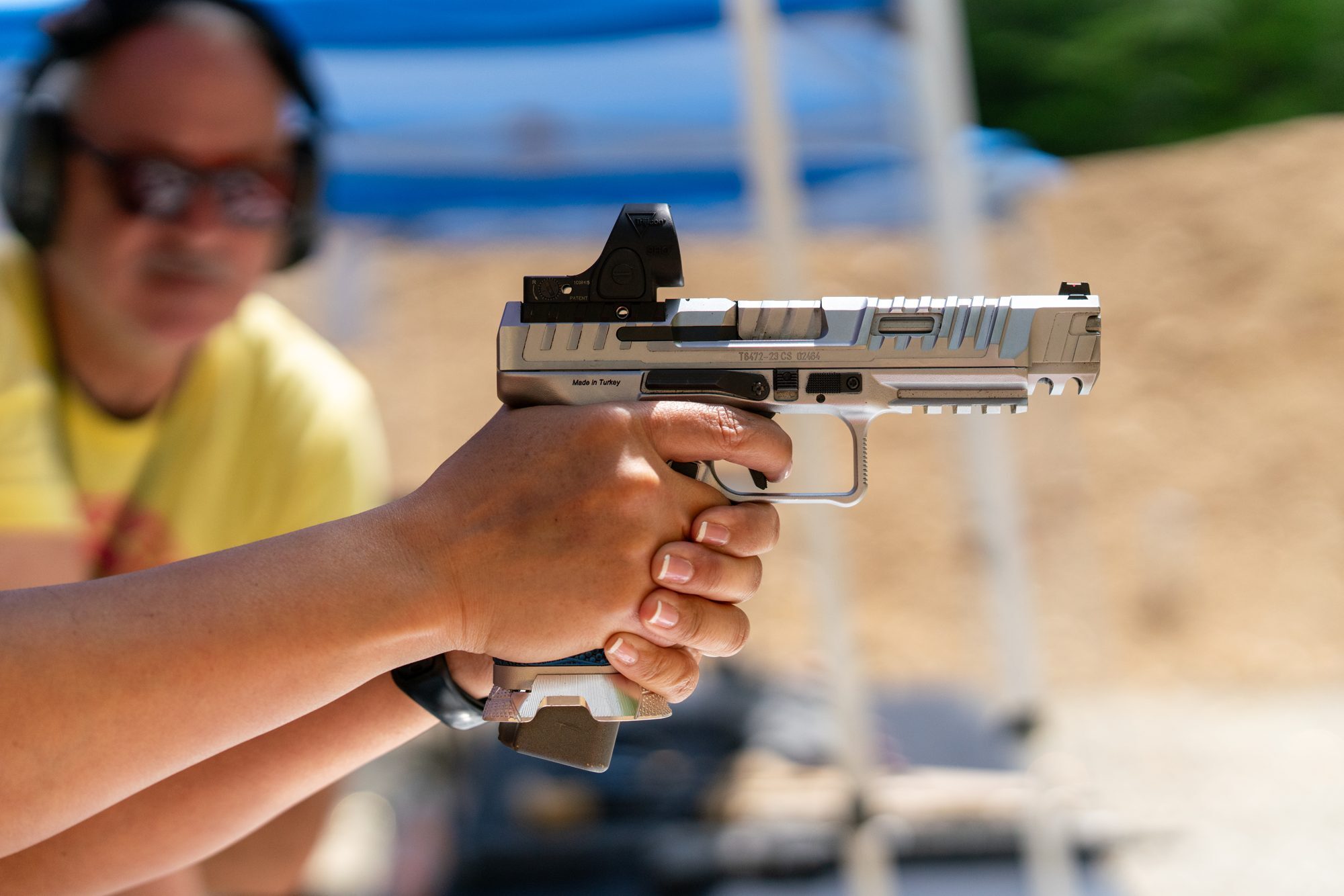
Say you find a gun you can grip well, with a slide that you can manipulate, with a trigger that’s easy to reach, and you’re able to make a consistent trigger pull through dry-fire practice. All of this can be true, and it still could be the wrong gun for you when it comes to live fire. This is where people make mistakes when they buy a gun without test-firing it, only to find out they can’t hang onto the pistol when it recoils. Your ammunition selection can also affect how much felt recoil a pistol has. For example, defensive hollow-point +P ammunition can feel way different than heavy, slow-moving, 147-grain full metal jacket ammo. If you go to a gun range and rent a handgun you might want to carry, for example, it’s important to test-fire it with the defensive ammunition you plan to use if you’re allowed to. Most range rentals will force you to buy their ammunition, and while that’s fine, just understand that you’re only getting a feel for that gun with one type of ammunition. Ultimately, the live-fire test will reveal everything you need to know about whether or not a gun is the right fit for you.
You’re Ready to Buy a Gun
You’re ready to buy a gun if you’ve dry-fired, live-fired, and function-tested a gun and are happy with how it shoots and feels in your hand. Only you can make the decision if a gun is right for you. No one else, not even your spouse, your parent, or a friend, can tell you whether or not a gun will work for you. Only you can determine if a gun is the right fit for you.